In December 1843 a busy London civil servant asked an artist friend to design one picture he could print, sign and post to everyone. The idea flopped at first, then became one of the best-loved Victorian traditions.
Victorian Christmas cards changed quickly as printing and postage changed. Pick a feature to see roughly when it belongs. The bar shows how early in the story it comes.
A rough guide from museum collections, not a valuation or a certain date.
TWO NUMBERS WORTH KNOWING
A small print run, a very big habit.
How many cards Henry Cole printed, and how many the UK buys today.
1,000
Copies of the first card
Cole commissioned a printer to put Horsley's design onto cards, printing a thousand copies. Sold at a shilling each, it was expensive and judged a commercial flop.
1843 · V&A
≈ 1 billion
Christmas cards bought in the UK each year
The V&A says around a billion Christmas cards are bought in the UK each year. The Postal Museum estimates about 900 million are sent within the UK.
TODAY · V&A
When one of Cole's first cards was auctioned in 2013 it sold for £22,000, according to the V&A, which holds over 30,000 greetings cards, more than half of them for Christmas.
MAKE A CARD THE 1843 WAY
One picture, a few kind words.
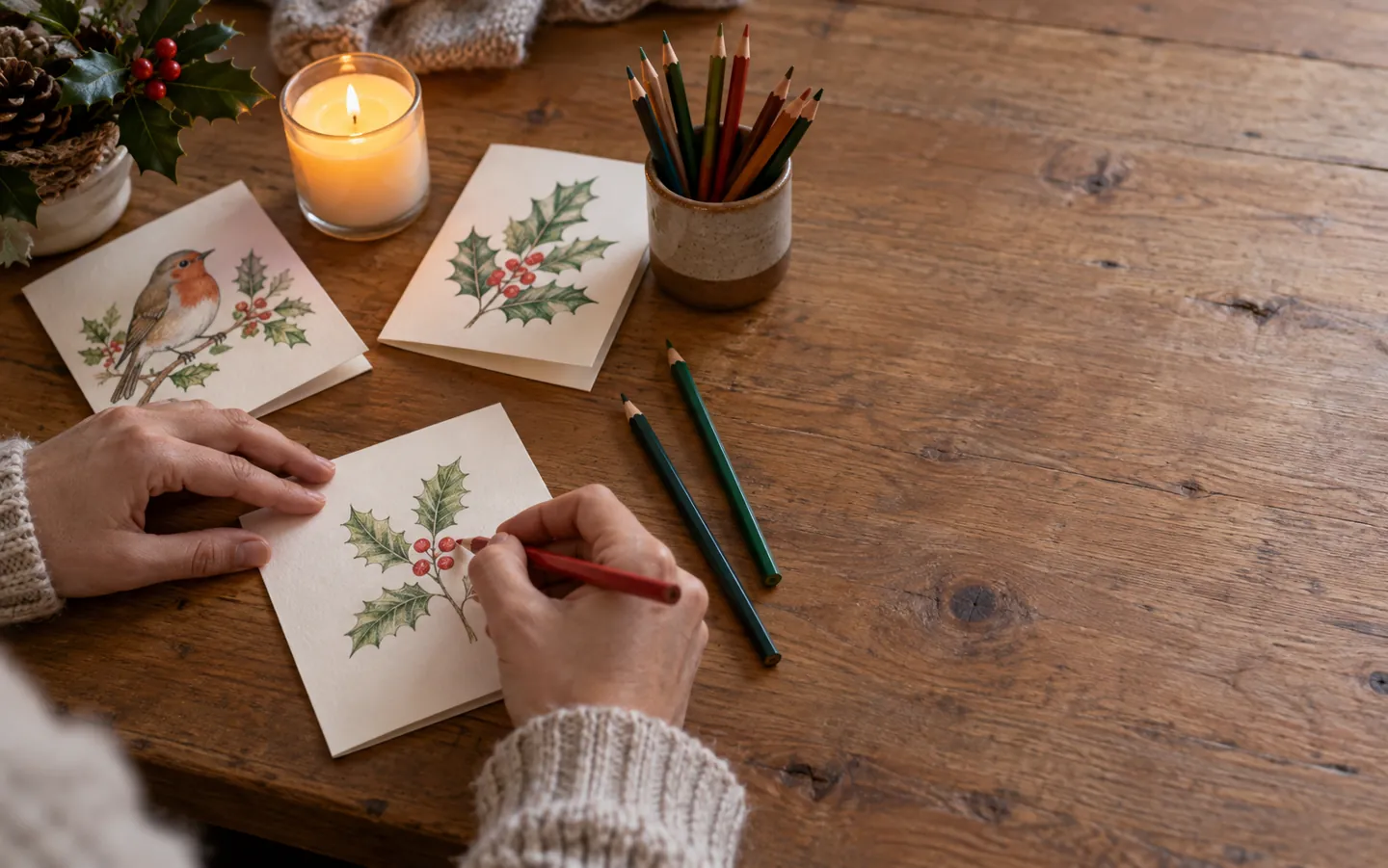
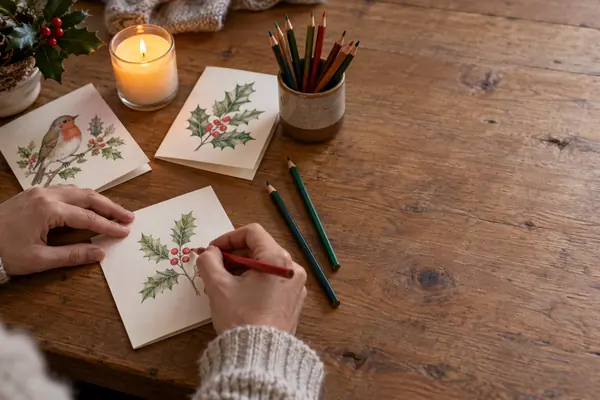
The first card had a simple plan: a central scene, small pictures around it, and a space for each person's name. You can follow the same plan with a pencil.
Draw a central scene
Horsley's card showed three generations of a family raising a toast in a hand-coloured central panel.
Frame it
Around the scene he drew a decorative trellis and small pictures of giving, for a message of celebration and charity.
Borrow a Victorian symbol
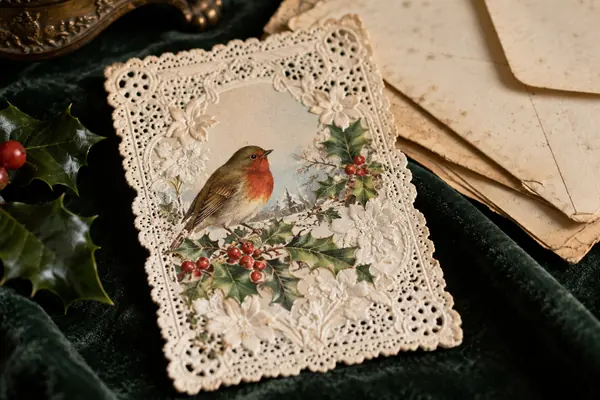
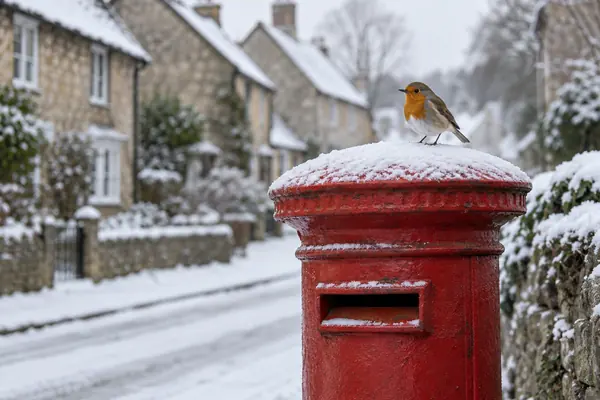
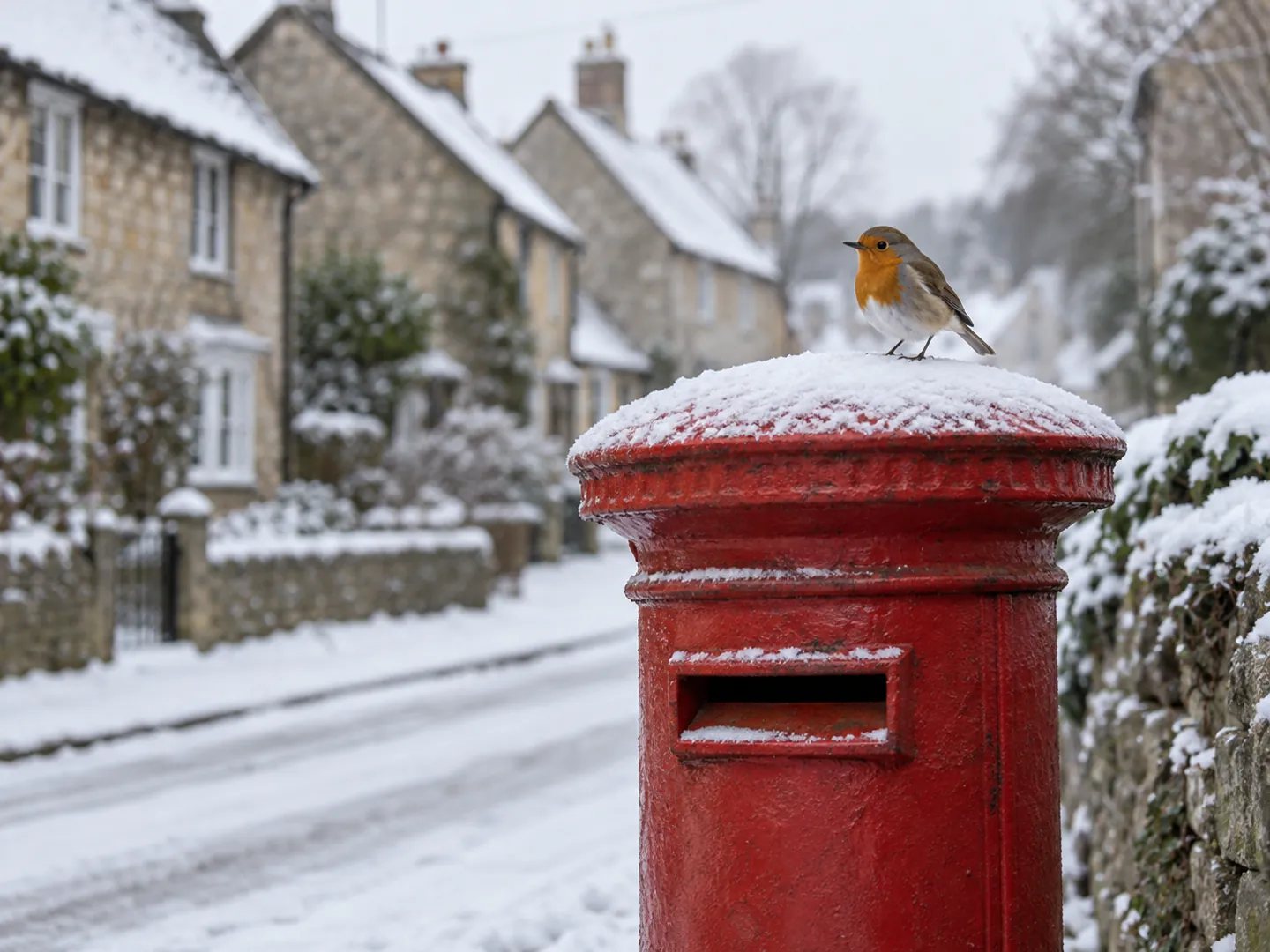
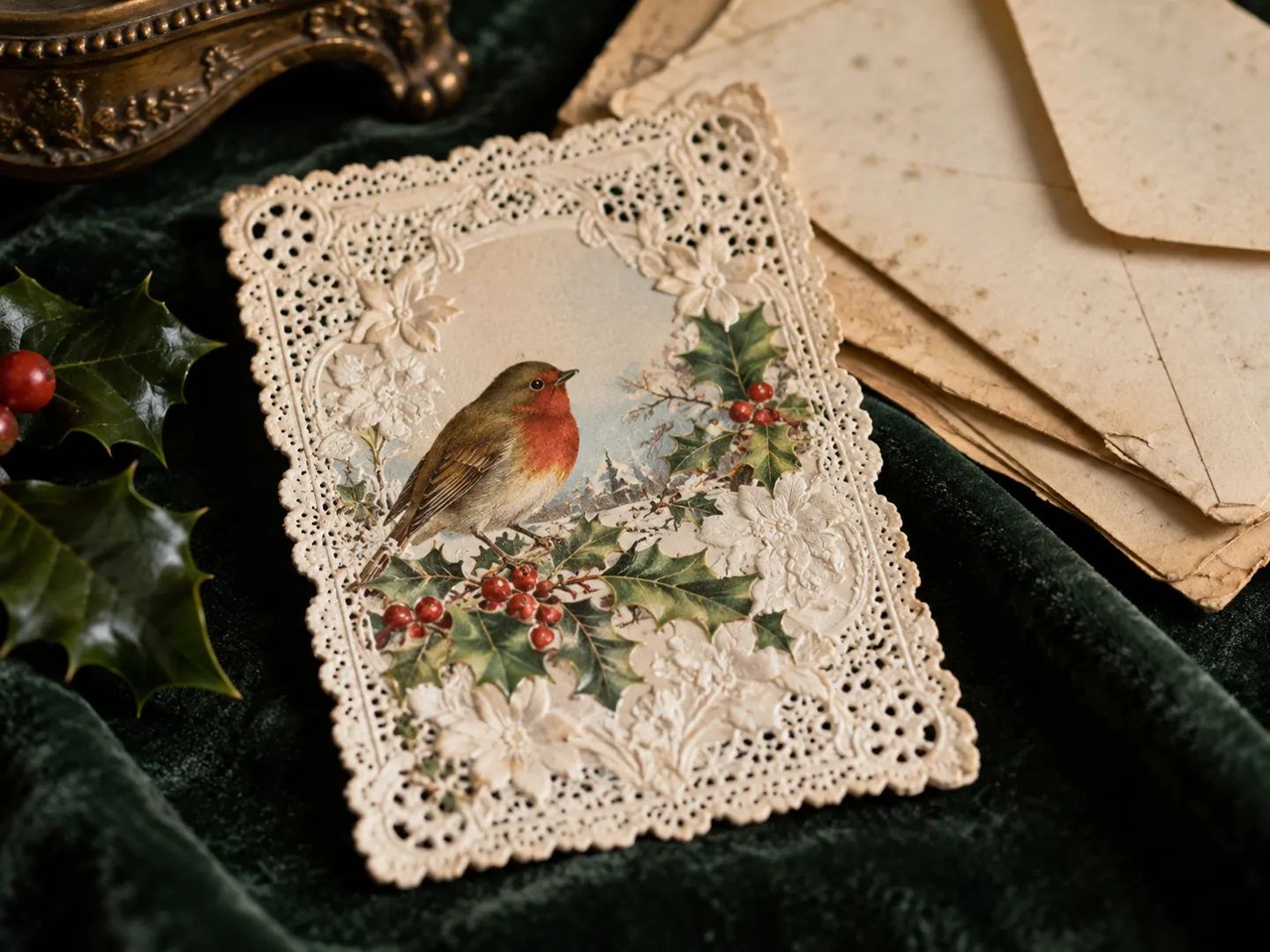
Robins, holly, evergreens, snowy landscapes and pillar boxes all became familiar on Victorian cards.
Leave room to write
Cole's cards had spaces for the sender's and recipient's names, so every copy could be personalised by hand.
AI-generated image, not a photograph of a real person or place.AI-generated image, not a photograph of a real person or place.
ROBINS AND POSTMEN
Why so many cards show a robin.
The Postal Museum says Victorian postmen were said to be nicknamed 'Robins' after their bright red jackets and waistcoats, and Anthony Trollope's 1860 novel Framley Parsonage has a character call the postman 'Robin postman'. Others think robins simply suit the season.
Pillar boxes, postmen and mail coaches all appeared on Victorian cards, perhaps because the post itself had become so popular. English Heritage adds that the cracker was another Victorian idea: Tom Smith patented his first in 1847.
Questions
Questions people ask
Who sent the first Christmas card?
Henry Cole, a civil servant who later became the first director of the V&A, sent it in 1843. His friend John Callcott Horsley designed it, and Cole had a thousand copies printed.
What did the first Christmas card show?
A hand-coloured central panel of three generations of the Cole family raising a toast, surrounded by a decorative trellis and black and white scenes of giving. It read 'A merry Christmas and a Happy New Year'.
Why did Christmas cards catch on?
The Penny Post of 1840 made sending post cheap, and from the 1860s new printing methods made colourful cards cheaper. By the 1870s and 1880s sending cards was firmly established.
When did Christmas trees become popular in Britain?
The Royal Collection Trust says Queen Victoria and Prince Albert popularised the tree after an 1848 Illustrated London News picture showed their family around a decorated tree.
How many Christmas cards are sent now?
Estimates differ. The V&A says around a billion are bought in the UK each year, and the Postal Museum estimates about 900 million are sent within the UK.